Water removal · Drying · CleanupDiscuss water damage: (941) 318-8059
Water damage restoration in Venice, FL

Water Damage
Restoration
in Venice, FL

Water in your home? Start with a clear plan. Discuss the damage, arrange an assessment, and understand the right water removal and drying steps for your property.

Homes & businesses · Water removal · Structural drying

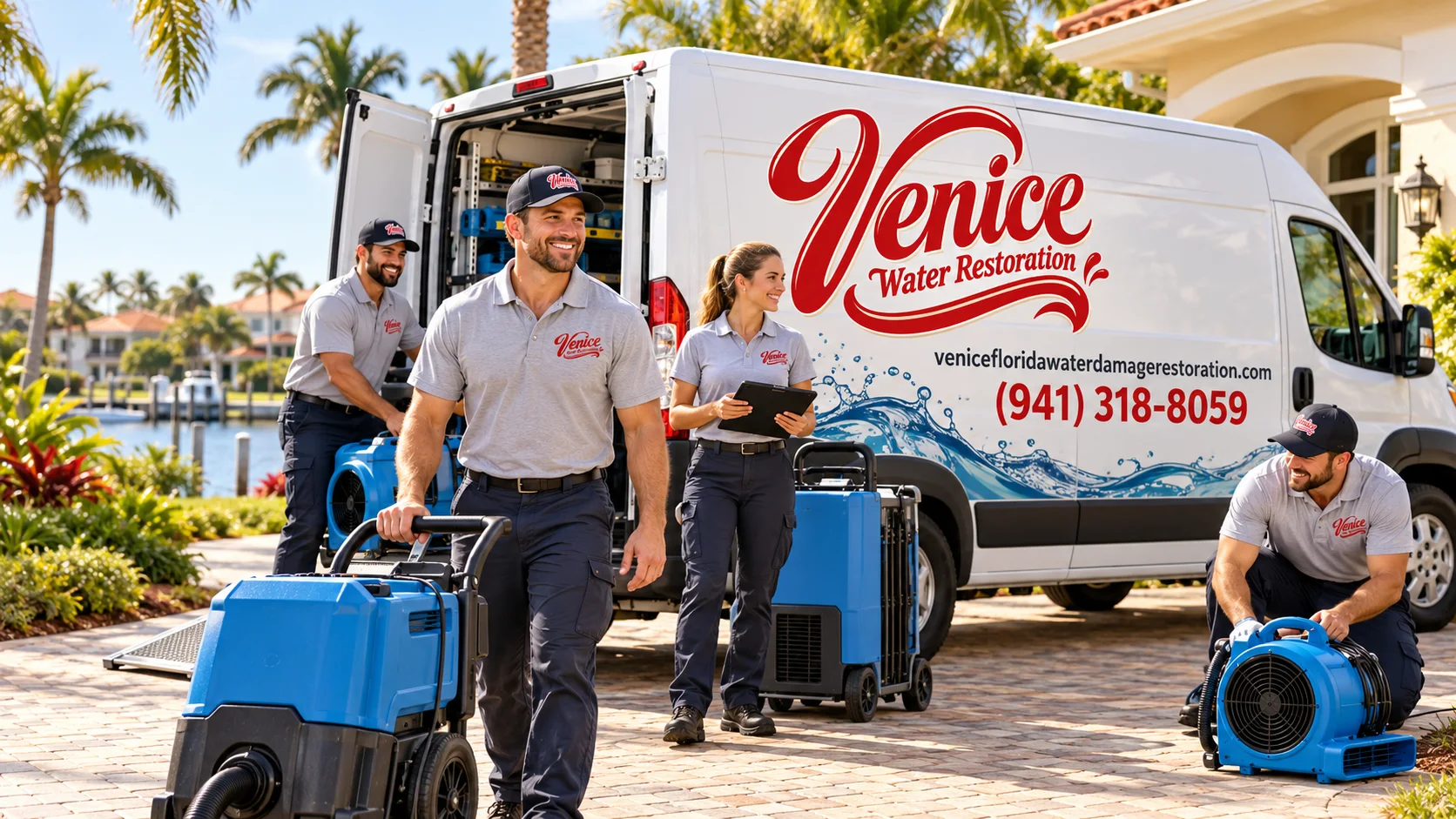
Venice Water Restoration van and team with drying equipment beside a home
NOT SURE WHERE TO START?Describe what happened
We’ll discuss the next step
(941) 318-8059
Residential properties Water removal & cleanup Structural drying guidance Venice, Florida
The right help for your situation

Water damage restoration
services in Venice, FL

A burst pipe, a persistent leak, and outside floodwater call for different decisions. Start with the situation closest to yours.

Emergency Water Removal

Standing water needs a clear first step. Discuss where the water came from, whether it is still entering, and which rooms are affected.

Explore this service

Water Extraction Services

Water trapped in carpet, flooring, or other materials may remain after puddles disappear. Extraction addresses accessible water before the drying plan is established.

Explore this service

Flood Damage Cleanup

Outside water entering a building calls for a different cleanup discussion from a small supply-water spill. Share the entry points and any known contamination.

Explore this service

Storm Water Damage Restoration

Rain entering through a roof, window, or other opening can affect ceilings, insulation, walls, and flooring. Describe the entry point and any continuing exposure.

Explore this service

Burst Pipe Water Damage

A failed pipe can release water into several connected rooms before the problem is noticed. Explain when the flow began and whether the supply is now isolated.

Explore this service

Water Leak Damage Restoration

Slow leaks can affect materials over time without creating a large puddle. Persistent staining or recurring dampness deserves a source-focused assessment.

Explore this service

Ceiling Water Damage

A wet ceiling may be the visible end of a roof or plumbing leak above it. Sagging material or active dripping changes the safety and assessment priorities.

Explore this service

Crawl Space Water Damage

Water beneath a building can be difficult to see or reach. An under-floor inspection needs safe access and attention to plumbing, insulation, and framing.

Explore this service

Structural Drying Services

Structural drying focuses on moisture remaining in building materials after water removal. A dry-looking finish does not establish the condition of every layer.

Explore this service

Water Damage Cleanup

Water cleanup includes more than removing visible puddles. The appropriate scope depends on the source, affected surfaces, contents, and remaining moisture.

Explore this service

Commercial Water Damage Restoration

Water affecting a business creates access, contents, and communication needs alongside the physical restoration work. Describe the premises and affected operating areas.

Explore this service

Water Damage Inspection and Assessment

An assessment helps turn visible damage and uncertainty into a practical scope. Share the water history, affected rooms, and any work already attempted.

Explore this service

Residential Water Damage Restoration

Water inside a home affects rooms, finishes, and belongings differently. Begin with the source, the occupied areas, and any immediate access concerns.

Explore this service
Look beyond the puddle

Visible water is only
part of the picture

Water can reach flooring, drywall, insulation, and other building materials. Moisture may remain beneath finishes even after the surface looks dry.

Recognizing the affected rooms and materials helps make the first conversation more useful. Describe what you can see without entering unsafe areas.

Understand moisture assessment

When to seek water damage help

  • Standing water or an active supply-line leak
  • Wet carpet, flooring, or baseboards
  • Stained drywall or a damp ceiling
  • Moisture remaining after initial cleanup
  • Floodwater entering living or work spaces

Keep away from electrical hazards, contaminated water, sagging ceilings, and structurally unstable areas.

Our restoration process

From water damage
to a clear next step

Explore the process
01

Initial contact

Tell us about the water source, affected rooms, property type, and when you noticed it.

02

Inspection & assessment

Evaluate visible damage, moisture concerns, access, and the appropriate scope.

03

Water removal

Remove accessible standing water using methods suited to the conditions.

04

Drying & monitoring

Evaluate affected materials, plan drying, and review moisture conditions.

05

Cleanup & next steps

Review cleaning, material condition, remaining damage, and additional repair needs.

The actual sequence depends on the water source, contamination, property conditions, and severity of damage. Source repairs and reconstruction may involve separate qualified trades.

Water damage in context

Why moisture decisions
matter in Southwest Florida

Gulf Coast storms, heavy summer rain, humidity, and older building stock all shape how water damage is assessed in Venice.

24–48 hrs

The EPA advises drying wet materials within one to two days to help prevent mold growth.

3 categories

Industry standard IICRC S500 classes water as clean, gray, or black by contamination level.

4 classes

The same standard grades damage by how much water has absorbed into materials and how fast it can evaporate.

Jun 1–Nov 30

The Atlantic hurricane season overlaps Florida’s wet season, when roof, window, and drainage failures are most common.

A short history of water events near Venice

  1. 1920sThe Brotherhood of Locomotive Engineers plans and develops Venice, which is incorporated in 1927. Many older homes predate modern floodplain and building standards.
  2. 2004Hurricane Charley, a Category 4 storm, crosses Charlotte Harbor to the south, a benchmark event for Southwest Florida building and repair practices.
  3. 2022Hurricane Ian makes landfall in Southwest Florida south of Venice, causing wind damage, storm surge, and prolonged river flooding across the region.
  4. 2024Hurricanes Helene (September) and Milton (October) strike within two weeks, with Milton making landfall near Siesta Key in Sarasota County.

Common sources of water loss

  • Roof and window openings during storms
  • Supply lines, water heaters, and appliance hoses
  • Air-conditioning condensate drains in humid months
  • Slab and wall leaks that show up slowly
  • Surface flooding after heavy rain

Sources: US EPA mold guidance, IICRC S500 standard, and NOAA National Hurricane Center storm reports. Verify details for your property directly.

What people usually do

Common first reactions
and what to consider instead

Most people act quickly and with good intentions. A few common habits can leave moisture behind or add risk.

Wait for it to dry on its own

Surface drying can hide moisture in padding, wall cavities, and subfloors. Consider a moisture assessment before assuming materials are dry.

Use a household vacuum on standing water

Standard vacuums are not designed for water and can create an electrical hazard. Stay out of wet areas near outlets and power.

Only run fans and a dehumidifier

Fans help, but without knowing where the moisture is, drying can stall. Ask how drying will be monitored.

Keep all wet materials

Some porous materials or contaminated surfaces may not be recoverable. Ask which items were inspected and why they stay or go.

Delay calling the insurance company

Standard homeowners policies often treat flood and sudden leaks differently. Check your policy and document damage with photos.

Skip the source repair

Drying will not last if the leak, roof opening, or drain problem remains. Ask which trade handles the source.

Every property is different

A plan for your space.
And the materials inside it

Practical decisions about access, belongings, affected surfaces, and the work that comes next.

Residential properties

Help for homes, condos,
and rental properties

Evaluate visible and hidden moisture, remove accessible water, and determine whether affected materials need drying, cleaning, or removal. Consider unaffected rooms and belongings where practical.

Residential water damage
Commercial properties

Clear scope for occupied
and working spaces

Offices, retail spaces, and commercial rentals have different access and documentation needs. Discuss the affected areas, contents, operational concerns, and appropriate restoration scope.

Commercial water damage
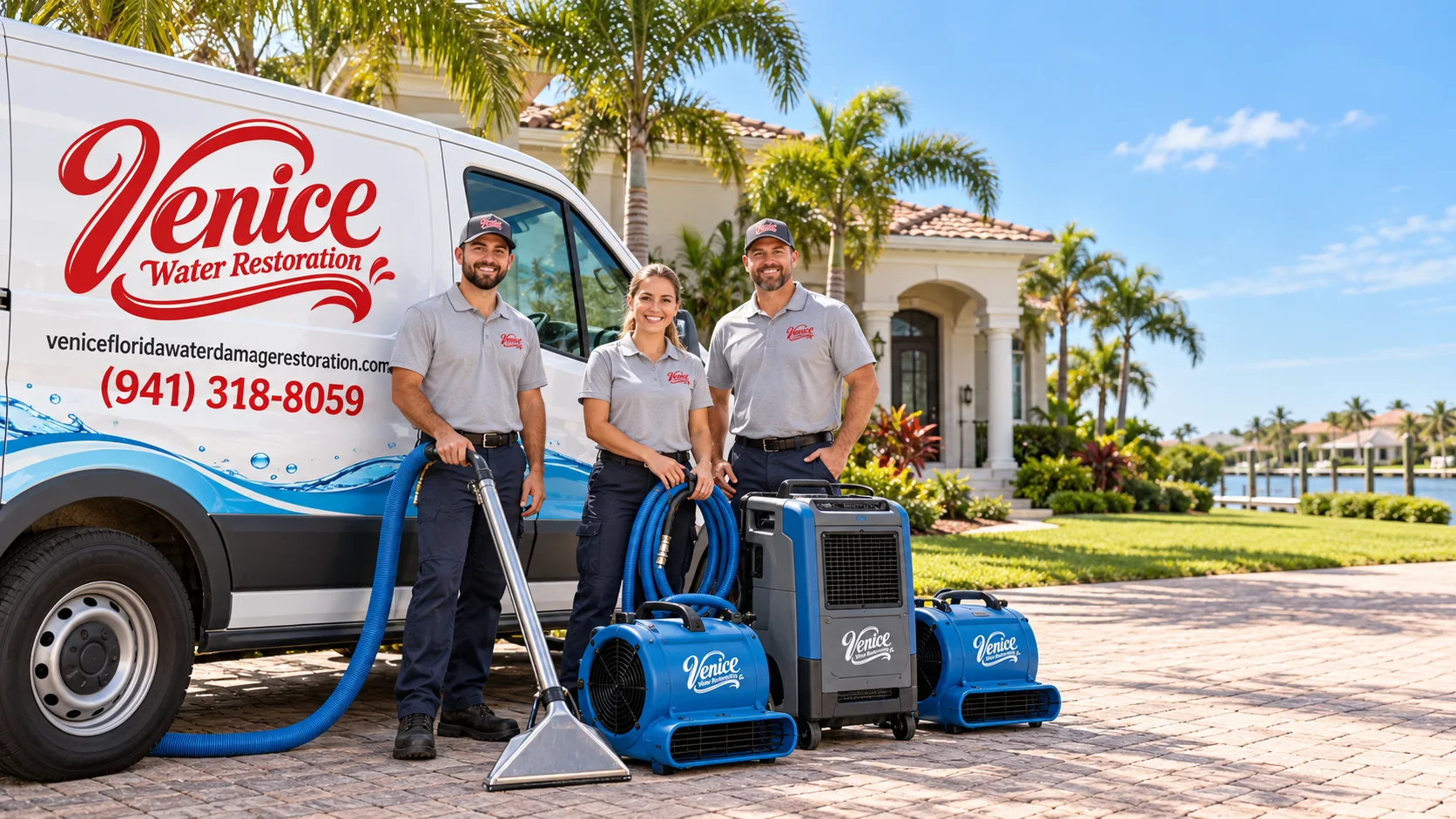
Venice Water Restoration team with extraction and drying equipment
Our focus

Calm communication.
Practical decisions

Venice Water Restoration focuses on water damage concerns in Venice. The starting point is understanding what happened and what the property shows.

A useful scope explains the affected materials, the proposed removal and drying steps, and the work that may require another trade. Ask questions before work begins.

About Venice Water Restoration
Venice property concerns

Water can enter
in more than one way

Consider rain entering a roof or window opening, failed plumbing, appliance connections, and air-conditioning condensate drainage. The entry source matters as much as the wet area.

Discuss the event and the property’s specific conditions. Do not assume every home has the same exposure or that one drying approach suits every assembly.

Read water damage guidance
Service area

Venice, Florida

Have a property in a nearby community? Call with the address to confirm coverage and service suitability before arranging an assessment.

Check service coverage
Understanding the scope

Restoration cost starts
with the property

Area, materials, water quality, access, and the amount of moisture all affect the work. Drying, cleaning, contents handling, and repairs may form different parts of the scope.

Call to describe the damage. Ask what is included and which additional work needs a separate estimate.

Discuss your water damage

Information that helps

  • Where the water came from, if known
  • When you noticed it and whether it continues
  • Affected rooms, floors, walls, and contents
  • Any cleanup or repairs already attempted
  • Property address and safe access conditions
Remove it, then dry it

Water drying and
extraction

Extraction removes standing and pooled water. Drying addresses what remains in flooring, drywall, framing, and other materials. They are separate stages, and the second is easy to overlook.

Drying equipment, airflow, and humidity control are chosen for the materials and conditions. Moisture readings over time help show whether drying is progressing.

Water extraction services

Drying and monitoring steps

  • Remove accessible standing water first
  • Identify wet flooring, baseboards, and wall bases
  • Place airflow and humidity control suited to the space
  • Record moisture readings during the drying period
  • Review whether materials can stay or need removal
After storms and heavy rain

Flood water damage
removal

Floodwater from storm surge, overflowing drainage, or heavy rain can carry soil, debris, and contaminants. It is treated differently from a clean supply-line leak.

Porous materials that contacted floodwater often need closer evaluation, and safe access comes before cleanup. Ask what was assessed and how contamination concerns affect the scope.

Flood damage cleanup

What to ask about flood cleanup

  • Is the water contaminated, and how is that handled?
  • Which flooring and wall materials may need removal?
  • How will remaining surfaces be cleaned and dried?
  • Which electrical or structural checks come first?
  • How will documentation support an insurance claim?
Offices, retail, and rentals

Commercial water
cleanup

A water loss in a working building affects tenants, inventory, and daily operations. The scope should account for access hours, shared walls, and occupied areas.

Documentation matters for owners, property managers, and insurers. Discuss affected areas, contents, timing, and which trades may be needed beyond the water work.

Commercial water damage

Commercial scope checklist

  • Affected suites, shared walls, and common areas
  • Inventory, equipment, and records at risk
  • Work hours and tenant access limits
  • Photo and moisture documentation for the claim
  • Source repairs and reconstruction trades
After the water

Mold after water damage?

Mold can start within a day or two on materials that stay wet. If you see spotting or smell mustiness after a leak or storm, learn how inspection, containment, and removal work.

Mold removal in Venice, FL
Common questions

Clear answers. A calmer next step

General guidance to help you prepare for a conversation about your property.

What should I do first after water enters my property?

Avoid areas with electrical hazards, contaminated water, sagging ceilings, or structural instability. If the water shutoff is safely accessible, stop an active supply leak. Describe the source, affected rooms, and timing when you call.

Can materials still be wet after visible water is removed?

Yes. Moisture may remain beneath flooring, behind wall finishes, or in insulation. The appropriate assessment depends on the affected materials and access; a dry-looking surface is not a complete moisture check.

How long does structural drying take?

There is no single drying time for every property. Material type, saturation, access, conditions, and the drying approach all affect the duration. Ask how moisture conditions will be monitored.

What affects the cost of restoration?

The source and contamination, affected area, exposure time, materials, access, contents, drying needs, and related repairs affect the scope. A property-specific assessment is more useful than a fixed price from a short description.

Can floodwater create contamination concerns?

Water entering from outside may carry contaminants. Restrict access and discuss the source before attempting cleanup. Cleaning or material removal may be needed in addition to drying.

Do you serve addresses outside Venice?

Call with your property address to confirm coverage and the suitability of the requested service. Nearby coverage and availability should be confirmed before an appointment is arranged.

A clear next step

Let’s talk about your
water damage

Tell us what happened, which rooms are affected,
and where the water came from, if known.

Call (941) 318-8059
Call (941) 318-8059